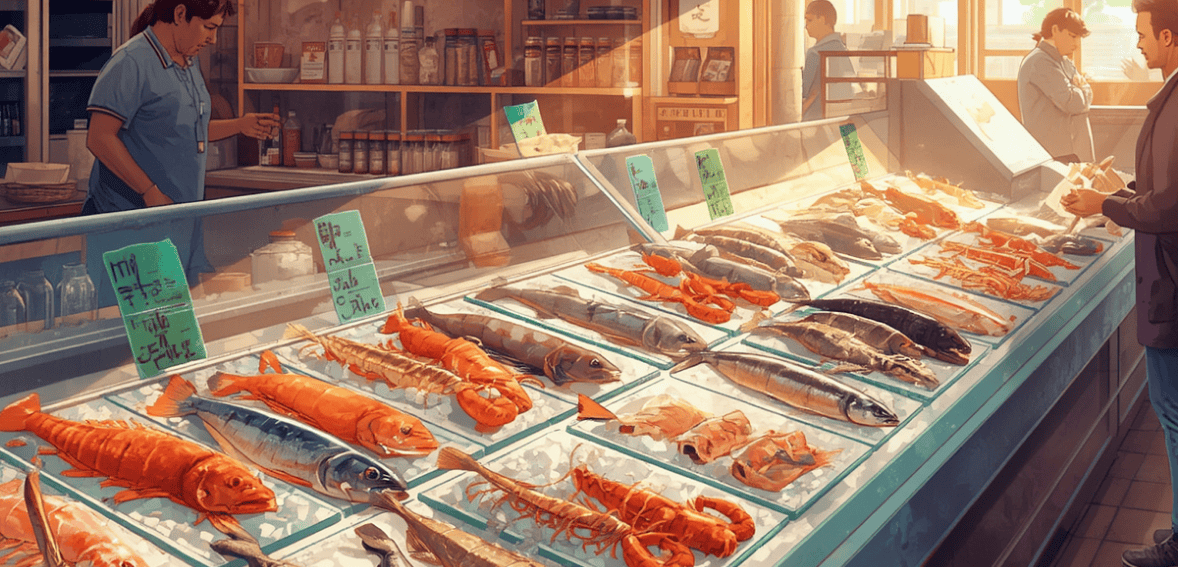
The Moment at the Register That Nobody Warns You About
You have selected salmon, shrimp, and crab legs and headed to the checkout line with your EBT card. The checkout process does not proceed as expected because some items may not be eligible for SNAP benefits. The cashier is just as confused as you are, and neither of you knows which item is causing the issue.
These problems occur at grocery stores around the country. SNAP seafood counter confusion is one of the most common problems for EBT card users, but the issue goes largely undocumented. The rules may seem obvious, yet the seafood counter is one of the most confusing locations in the store. Knowing which items qualify at the seafood counter can save you time, stress, and embarrassment at the grocery store.
What SNAP Actually Covers at the Seafood Counter

According to the USDA, foods purchased with SNAP benefits must be intended for preparation and consumption at home. Most seafood products are eligible for SNAP. These products include fresh and frozen fish fillets, breaded fish products, frozen fish meals, and other packaged seafood products that are ready for the oven.
Most of the confusion surrounding SNAP is not about what is and is not included. The confusion typically centers on the gray area between “food you take home and cook” and “food that has been prepared for you.” This gray area is especially common at the seafood counter. The line can become blurry, and determining which side of the line a seafood product falls on often depends on its packaging, preparation method, and temperature.
The Hot Food Problem: Why Temperature Matters for SNAP Eligibility
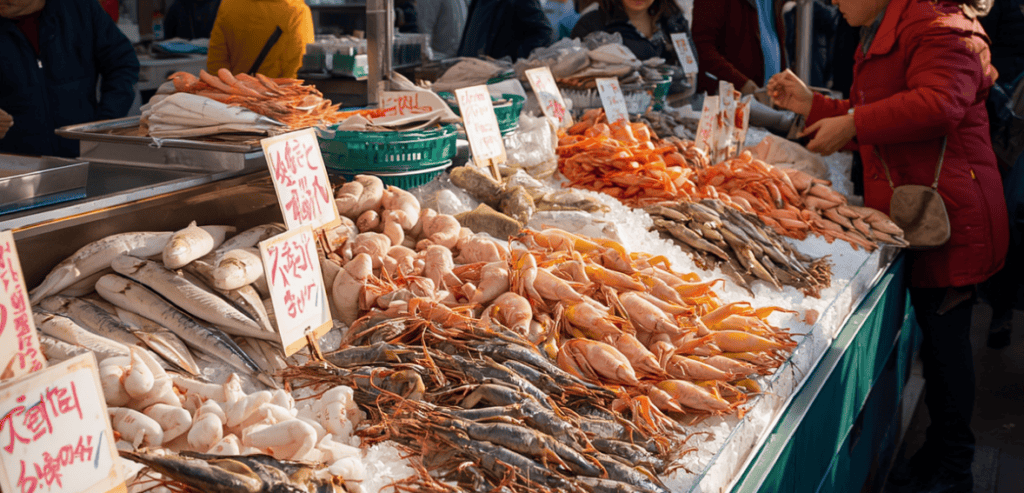
Hot Prepared Seafood Is Not SNAP-Eligible
This is the rule that confuses most shoppers. Any seafood item that is hot at the point of sale is not eligible—period. A piece of baked salmon, steamed crab legs, or fried shrimp sold in hot display cases do not qualify, whereas those same items in raw form would.
This rule aligns with the original design of the SNAP program, which is to assist low-income households in purchasing food that needs to be prepared at home. Once a retailer sells a heated item, it is considered ready to eat and falls under the “hot food” category, which SNAP treats similarly to a restaurant meal.
What makes this rule particularly frustrating at the seafood counter is the visual overlap. The shrimp sold in the hot case and the cold case look practically the same. The difference in SNAP qualification, however, is significant.
Cold Prepared Seafood — A Gray Area That Trips Up Everyone
The Temperature Loophole That Isn’t Really a Loophole
When it comes to cold-prepared seafood, the situation is a bit muddled. Grocery stores often include refrigerated seafood sections with shrimp cocktail trays, cold-smoked salmon, and even ceviche. All of these items are sold for consumers to eat without further preparation. These items are processed but sold cold.
SNAP seafood counters can be even more confusing. The USDA states that cold-prepared foods are SNAP-eligible, provided they are sold cold. This means that a cold shrimp ring may qualify, while a similar product sold from a hot food counter does not.
Store cashiers and managers alike can be confused, which leaves consumers uncertain because SNAP seafood item eligibility can appear inconsistent.
SNAP Seafood Counter Items That Most Commonly Cause Confusion
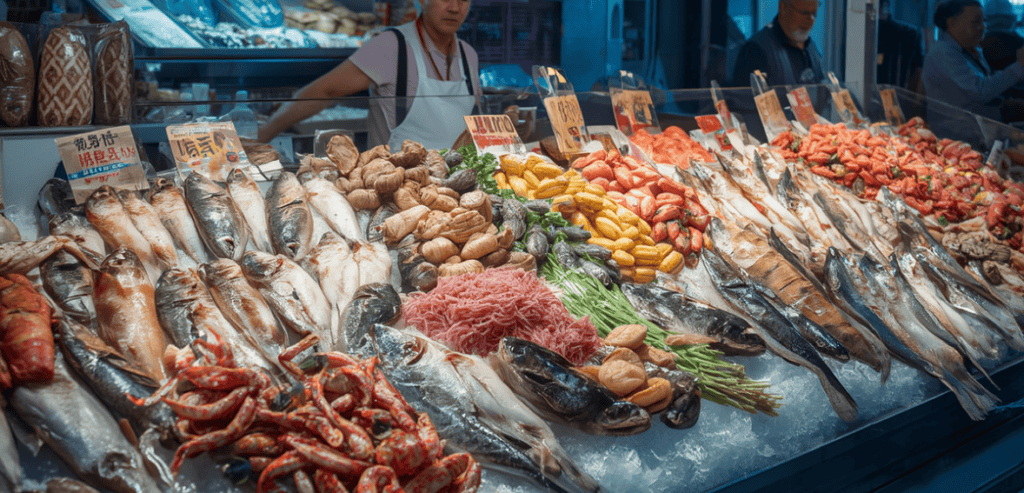
Marinated and Seasoned Raw Seafood
SNAP-eligible raw seafood is available at retail with a variety of marinades, seasonings, and herb rubs. These products are raw, displayed in a case, and intended for cooking at home. While they are sold for home meal preparation, they often create checkout issues. Some point-of-sale systems mistakenly reject marinated shrimp and fish because they are grouped with prepared food items in store databases. Customers and cashiers may assume that seasoning makes the product prepared, but the USDA defines prepared food differently from raw items intended for home cooking.
Sushi and Seafood Platters
The purchase of grocery store sushi has been one of the more common SNAP discussion points in recent years. Sushi is generally eligible under the cold food rule, as long as it is not sold hot. The issue arises with sushi sold at a counter and handed directly to a customer, especially if a store’s POS system categorizes all sushi as prepared food. Because of differences in selling practices, many SNAP customers avoid grocery store sushi altogether to prevent checkout issues.
Steamed Crabs and Shellfish With a Steam Fee
Several seafood departments offer customers the option to have live or raw shellfish steamed on-site before taking them home. This is one of the clearest eligibility traps at the SNAP seafood counter. As long as the crab or shrimp is raw, it is eligible for SNAP. However, once the store provides a steaming service, the item may no longer qualify. In some stores, the steam fee is a separate non-eligible charge. An item can move from a raw grocery product to a prepared item in minutes, creating a split-transaction issue that catches customers off guard.
Smoked Salmon and Shelf-Stable Seafood
Cold-smoked salmon that is packaged and sold in the refrigerated section is usually SNAP-eligible because it is classified as a processed packaged food rather than a prepared hot food item. The same generally applies to canned tuna, canned crab, and shelf-stable smoked fish products. These products rarely cause register issues in larger chain stores where product coding is standardized. Problems usually arise in smaller or independent markets where product categorization is less consistent.
Why Retailers and Cashiers Get It Wrong
It is important to note that retailers play a major role. Part of a store’s SNAP eligibility process involves coding products correctly in its point-of-sale system. If a grocery store codes all seafood counter items as “prepared foods” and does not distinguish between raw, marinated, and hot items, SNAP benefits may be declined for eligible products. This occurs in both large chain stores and smaller independent markets.
The USDA requires SNAP retailers to maintain accurate product coding, but enforcement can be difficult. With limited training, grocery store cashiers must distinguish between a SNAP-eligible cold shrimp ring and a hot shrimp item in a steaming tray. Consumers often absorb the confusion and assume the problem is related to their benefit balance rather than store coding.
Channel Fish Processing Company has noted in its retail guidance that a growing portion of seafood consumers use SNAP benefits, and retailers can build customer loyalty by accurately categorizing seafood products, whether fresh, frozen, or prepared.
Practical Tips for SNAP Shoppers Navigating the Seafood Counter
To avoid confusion at the SNAP seafood counter, use a simple mental checklist before reaching the register. Is the seafood item raw? Is it cooked by the store? Is it packaged for home preparation? If the answers are “raw,” “not cooked,” and “yes,” the item will generally qualify. If the seafood item is warm, cooked, or presented as ready to eat, it likely does not qualify.
When making a large purchase and you are unsure whether an item qualifies, ask an associate to check how the item is coded in the POS system. Do not wait until checkout. If an item is incorrectly rejected by SNAP, ask a manager to review it. Coding mistakes occur regularly and can often be corrected immediately.
Conclusion
The SNAP seafood counter isn’t as dangerous as a minefield, but shoppers do need some advance knowledge to navigate it effectively. The general rule is that seafood needs to be raw and unheated. There are grey areas in between the hot and cold food categories. Those grey areas include steamed shellfish, cold seafood platters, marinated display seafood, and in-store sushi, and can be exacerbated by the retailer’s coding practices and the cashiers’ knowledge level.
Knowing these tips can help you retain your SNAP benefits, reduce checkout anxiety, and give you the confidence you need to navigate the seafood counter. However, this is mostly the responsibility of the retailers. With proper coding and additional staff training, they could resolve the majority of the issues. Until they take action, knowing the rules will be your best advantage.
Frequently Asked Questions
Can I use SNAP benefits to buy fresh fish at the seafood counter?
Seafood products and fish fillets are typically eligible for purchase using SNAP benefits, provided that the store does not offer cooked or processed items. This means that salmon, tilapia, cod, shrimp, and shellfish are likely to be eligible.
Is sushi SNAP-eligible at grocery stores?
Sushi sold cold in a sealed, pre-packaged container is generally SNAP-eligible. However, freshly prepared sushi could be SNAP-eligible or ineligible, depending on how the retailer has categorized it in their POS system.
Why did my SNAP card decline a seafood item that should be eligible?
It’s probably a product coding error on the store’s end. Some retailers group everything in the seafood counter under prepared foods, which can misclassify some items as ineligible. You should have the store manager look at the product’s POS category.
Are steamed crabs from a grocery store seafood counter SNAP-eligible?
Typically, uncooked or live crabs are eligible for SNAP. However, if a store cooks crabs in a steaming machine, the product may lose its SNAP eligibility due to the hot food restriction. The steaming fee is also typically not eligible for SNAP reimbursement.