
Protecting your customers and your business starts with knowing what to look for.
There are countless daily transactions facilitated by EBT cards in the United States. Your business’s PIN pad is where these transactions are initiated and where theft is most likely to occur. Retailers and consumers lose millions of dollars each year due to skimming devices, fake overlays, and other fraudulent EBT hardware. As a store manager, you are the first and most important line of defense.
This guide will provide you with everything you need to know about EBT PIN pad tamper checks, including what to look for, how often to check, and how to respond to an issue.
Why EBT PIN Pad Tamper Check Is a Retailer’s Responsibility
The USDA Food and Nutrition Service (FNS) says authorized retailers must maintain the security of EBT transactions carried out in their stores. This requirement goes beyond merely accepting EBT cards. Retailers are also responsible for ensuring that the equipment used to process these transactions is not compromised.
Criminals design skimmers to be small and difficult to detect. These devices are used to capture customers’ card data and PINs. Sophisticated criminal networks can design equipment used for legitimate transactions that overlay and mimic the look and feel of legitimate equipment. There may be no reason for your customers to distrust your transaction terminal. They may just have given their EBT credentials to a criminal.
The results for your store are serious. Based on your processor agreement and SNAP authorization requirements, you may face audits, fines, and, in extreme cases, the complete loss of EBT authorization for your store as a result of a compromised transaction terminal.
Understanding What a Tamper Check Actually Involves
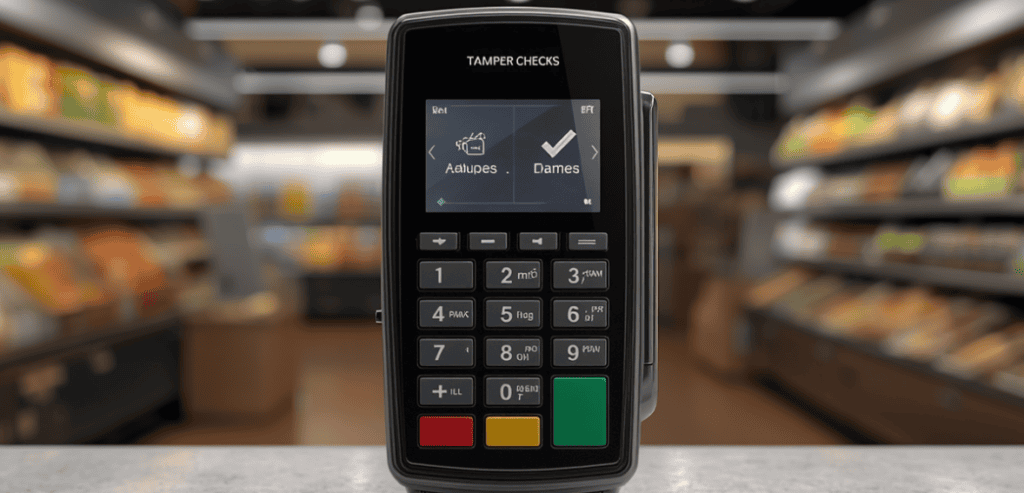
An EBT PIN pad tamper check involves a physical and visual inspection of payment terminals. It is not a software check. It is best done by a trained employee, ideally a manager, who must examine the payment terminal before store opening, during shift changes, and whenever it is left unattended.
Inspections must be performed on the outer housing of the payment terminal, the card entry slot, the PIN entry keys, the rear cable connections, and all mounting hardware on the counter. Payment terminals often display subtle signs that may be difficult to detect, such as the PIN entry keys sliding over their base, the terminal payment entry device displaying unusual key resistance, the payment terminal device having card entry slots with extra bulk, and the payment terminal device housing having a small pinhole opening for a surveillance camera to be placed to view and capture over the card entry slots the PIN being entered.
The first step in an effective payment terminal tamper-check program is training employees to recognize what normal terminals look and feel like. When payment terminals are installed, take pictures and display them as reference images next to the terminal. It is much easier to inspect something if you know what it is supposed to look like.
How to Conduct a Daily EBT PIN Pad Tamper Check
Consistency is what makes a tamper-evidence check a legitimate control rather than a checkbox exercise. The check should occur at the same time each day, ideally just before the store opens, and it should be done every day without fail.
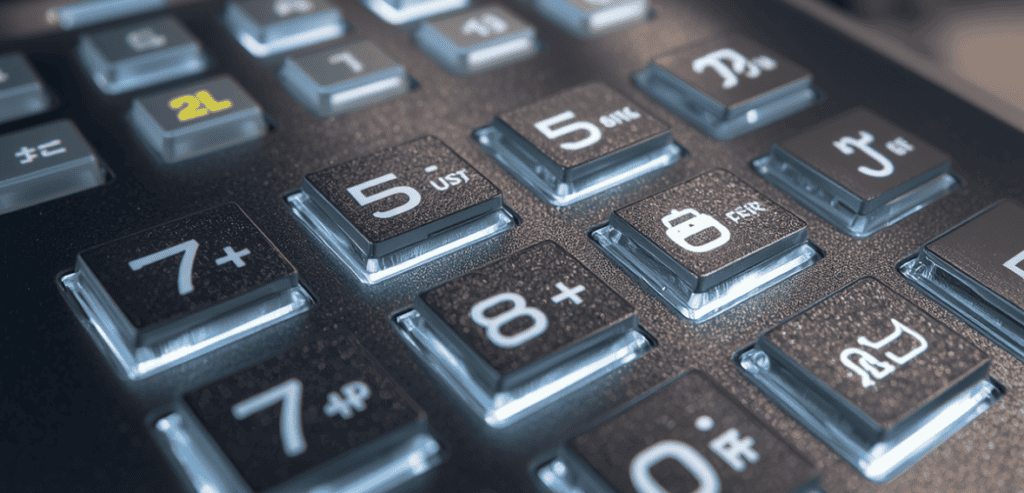
Start the inspection by checking the keypad. Each key should be felt to ensure it has the usual resistance. Since a keypad is used to check a skimmer and tampering is a key, instrument overlays usually are, and in this case, as two key layers are, they will most likely be found to be soft or even spongy. Likewise, check the space between the keys. It should be even. Be suspicious of patterns or color disparities or if there is something resembling an adhesive around the keypad.
Next, check the card slot. Use your fingers to check around the slot and try to move it. Skimming inserts are usually designed not to move at all, and a firm bond is the main design of the manufacturer’s components. If a component is moving, that is a great cause for concern. Check the slot with a small flashlight for objects and unusual depth.
Look for any cracks or new scratches on the device. Also, check for any recent marking on screws and for drill holes. Look at the connections along the cable. The device may have been opened if you see any evidence along the seams. Be sure the terminal is firmly in place on its mount. Some criminals will open the device and replace it with a new one. A mount that is re-secured or loose is a clear sign the device should have been replaced.
Document what you find. A simple log with the date, time, employee name, and a pass/fail notation is sufficient for routine checks. Any anomaly should be photographed and escalated immediately.
Setting Up a Tamper Check Program in Your Store
Building a Standard Operating Procedure
Proper execution of a tamper check depends on the associated procedures. Develop a brief Standard Operating Procedure (SOP) that identifies which terminals require checks, assigns responsibility for each check, and outlines the escalation process for suspicious findings. It is preferred to be concise with a one-page document rather than a lengthy, unnecessary 10-page manual.
Training Your Team
Each employee who opens the store or uses a terminal should receive basic training on tamper awareness. Training on this topic shouldn’t be lengthy. Simply providing a 15-minute walkthrough for a new employee, along with reference photos and an in-person demonstration at the terminal, should be sufficient. This should be done on a recurring basis as refresher training. Skimming technology is constantly evolving, and so should the team.
Working With Your Payment Processor
Your acquiring bank or payment processor plays a crucial role in terminal security. Contact them to find out what specific terminal model you are using and to obtain any manufacturer security recommendations. Many payment processors provide terminal security in the form of a tamper-evident seal. These are small stickers placed over screws or seams that break when the device is opened. Use them. Replace them on a scheduled basis. If a seal is found broken, treat it as a tamper event until proven otherwise.
What to Do If You Suspect a Compromised Terminal
Response time is a separate consideration when a terminal is found to be compromised. That terminal must be removed from service immediately. No further transactions must be conducted on that terminal until a solution has been reached. There is no benefit to continuing normal operations during an investigation into a compromised terminal. Your customers deserve to be safe more than you deserve to be convenient.
You should call your processor’s fraud or security department immediately. They will start you on the process of securing the terminal as evidence and replacing it with a backup terminal. They will also ensure you fill out the necessary report. This will also include contacting law enforcement and your state’s EBT processor. This will almost always be the contracted EBT provider of your state.
If you suspect customer data has been compromised, your processor will instruct you on the applicable laws. Depending on your state, you may have to notify your customers within a specified time limit.
Technology and Tools That Support PIN Pad Security
Physical inspections are the backbone of tamper detection, but technology can add a meaningful layer of protection.
Verifone and Ingenico are two of the most common terminal manufacturers in the US and incorporate custom tamper-proof circuitry in all their certified devices. Once those certified devices detect a tamper event, the memory is locked and erased, rendering the device useless to a criminal. It is critical that you have PCI PTS-certified terminals. An unrecertified or out-of-date terminal is a risk.
Some recent point-of-sale systems provide remote terminal management. Consequently, your processor may be able to identify unusual transactions that could indicate a skimmer is in use. It is not a substitute for a physical inspection, but it is a detection system that provides additional value.
Merchants of all sizes can find free resources on payment terminal security standards from the PCI Security Standards Council. Additionally, the USDA FNS Retailer Management page provides an overview of the requirements an authorized SNAP retailer must follow. The Secret Service’s financial crime division also publishes skimming advisories and analyzes payment card and EBT fraud.
Building a Culture of Security Awareness
A cultural investment is the most significant investment you can make over the long term. Your team should understand why EBT PIN Pad Tamper checks are important. When a team understands the reason behind a requirement, instinctive compliance will follow.
Place reminders at the terminals. If an employee identifies an anomaly, celebrate it. Make security discussions a staple of team meetings. If your team has a handle on the security of their store, they will be vigilant beyond what is stated in policy documents.
Your customers, and perhaps their customers, depend on EBT benefits and on you when they provide their PIN at your terminal. Each inspection you carry out is warranted and necessary.
Conclusion
EBT PIN pad tamper checks are not a bureaucratic formality. They are a practical, daily defense against a real and evolving threat. The steps are straightforward: inspect consistently, document thoroughly, train your team, and escalate quickly when something doesn’t look right. Retailers who treat terminal security as a core operational responsibility protect their customers, protect their SNAP authorization, and protect their reputation. Start with one solid inspection today, and make it a habit your entire team owns.
Frequently Asked Questions
How often should I perform an EBT PIN pad tamper check?
Check at least once daily, before your store opens. Locations with high traffic or stores with extended hours should check at every shift change. Your terminals will be safer the more frequently you check them.
Who is responsible for conducting tamper checks?
Store managers carry primary accountability, but any trained employee can perform a routine inspection. The critical requirement is that every person who conducts a check knows what a normal, uncompromised terminal looks and feels like — and has a clear process for reporting anomalies.
What happens if my store fails to perform tamper checks and a customer’s EBT data is stolen?
The USDA FNS can suspend or permanently revoke a retailer’s SNAP/EBT authorization as a penalty for processing chargebacks. Failing to implement secure terminal systems can result in fines imposed by the processing company. Depending on the laws of the state where the retailer operates, the retailer can be held civilly liable for any harm to its customers.
Can tamper-evident seals replace physical inspections?
No. Tamper-evident seals are a useful tool, but they are a supplement — not a substitute — for hands-on inspection. Criminals have learned to replace seals after tampering. A seal check should always be part of a broader physical inspection that covers the keypad, card slot, casing, and cable connections.